In Trophy Truck racing, finding the weak link is often just the beginning. The real challenge is figuring out why it failed and building something better.
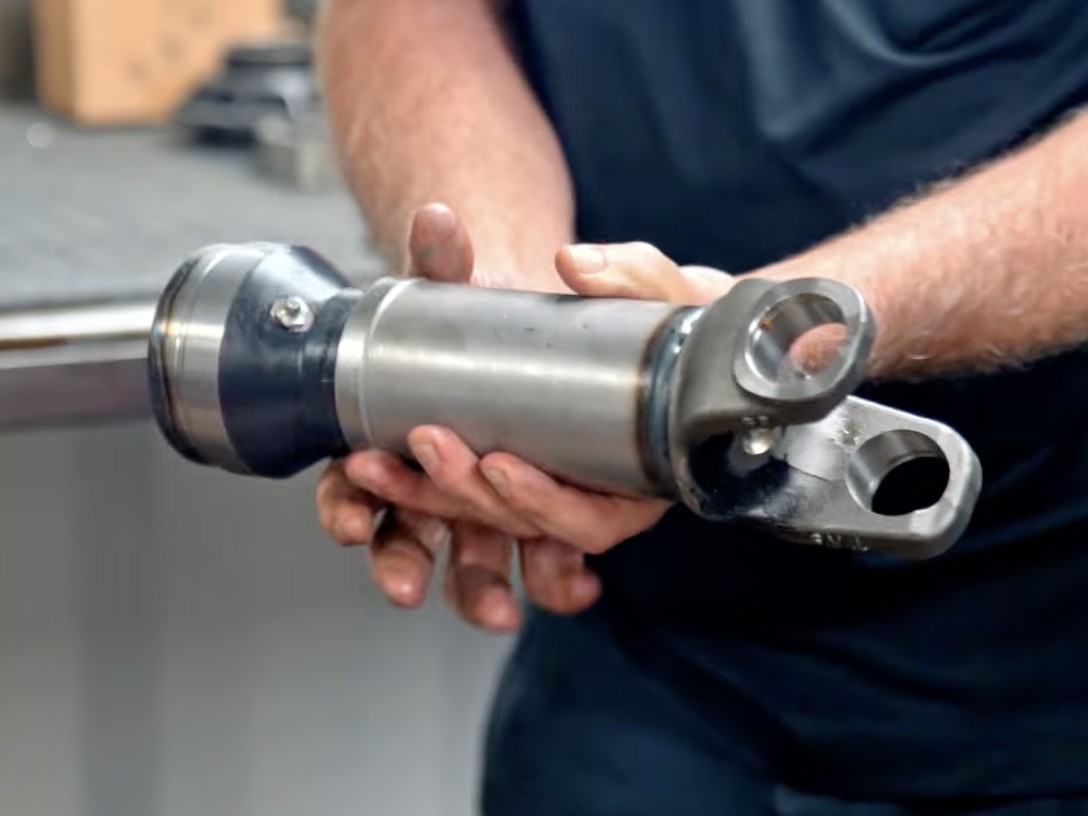
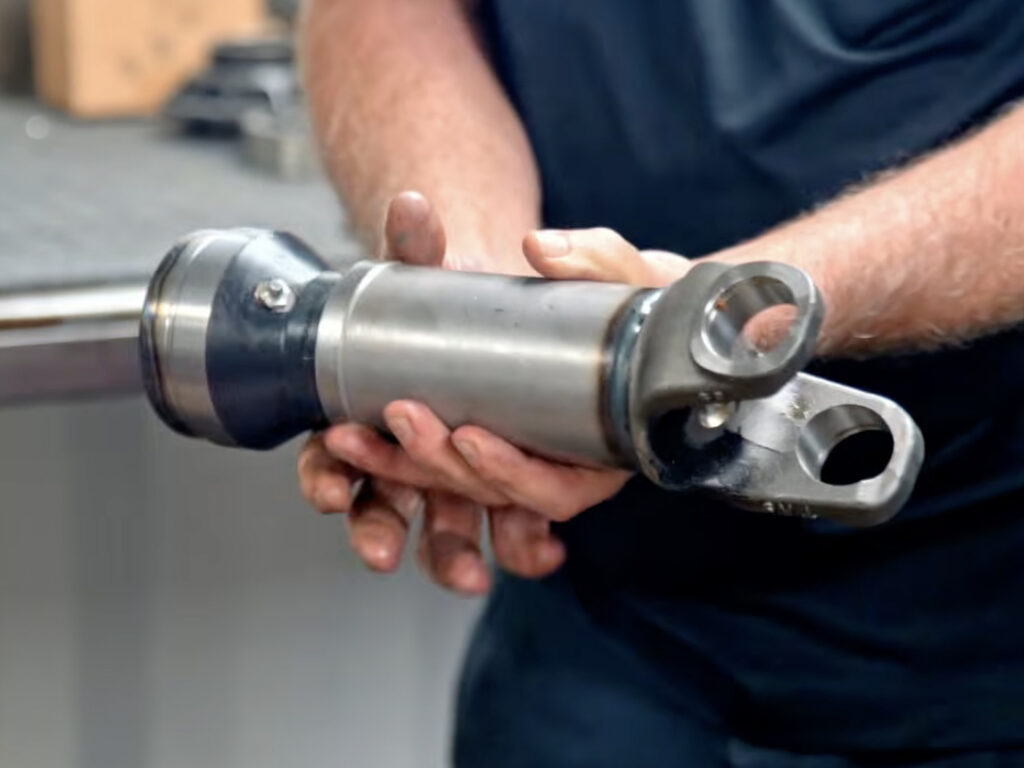
That’s the idea behind a new Trophy Truck double slip joint developed by JE Reel Driveline and Tubeworks. The two companies teamed up to create an upgraded design aimed at addressing driveline issues experienced in high-horsepower, long-travel Trophy Trucks and 6100 race trucks.
Solving a Trophy Truck Driveline Problem
Trophy Trucks create an extreme environment for driveline components. Massive horsepower is combined with high speeds, substantial suspension travel and repeated shock loads as the truck works through whoops, rocks, washes and hard landings.
That means a driveshaft doesn’t simply have to transfer power. It also has to accommodate the constant movement created as the suspension cycles.
JE Reel is no stranger to those demands. The Pomona, California-based company has spent decades building driveline components for applications ranging from Jeeps and rock crawlers to Ultra4 cars and Trophy Trucks. Its heavy-duty driveline solutions are designed around the large operating angles, extensive suspension travel and shock loads found in desert racing.
The company’s newest double slip joint takes that experience and applies it to a specific problem racers have been fighting.
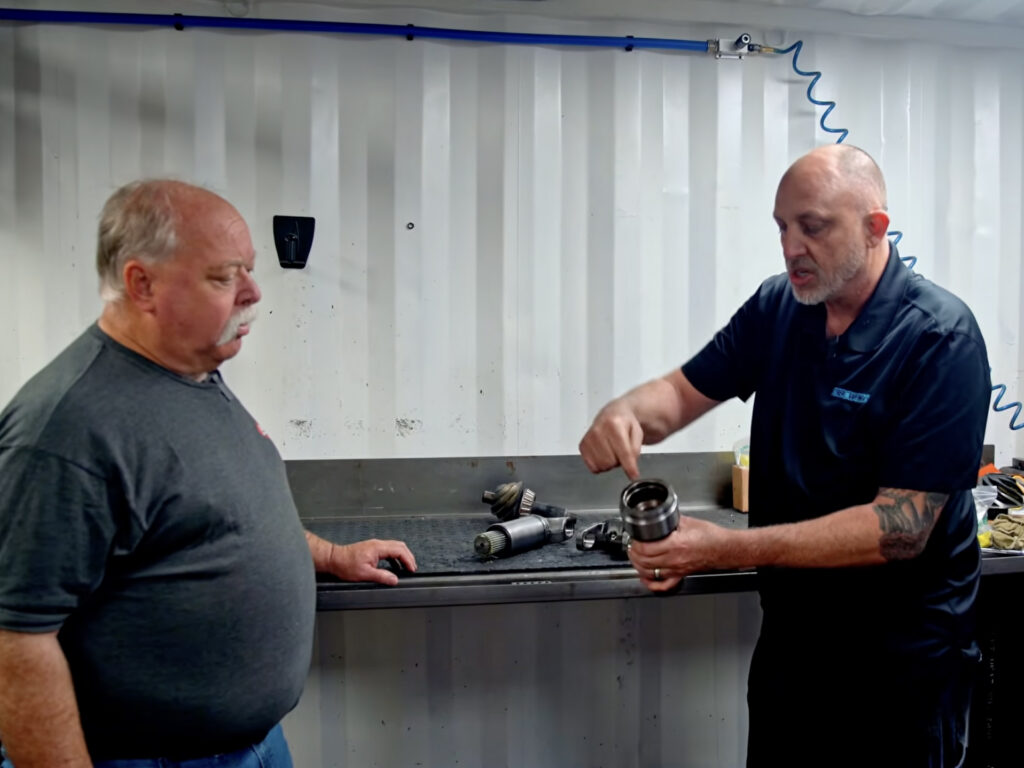
“They will freeze together and break off an underdrive or damage pinions,” Jim Reel explained. “I see a lot of spline problems. So, this will greatly reduce that and give longevity to these parts.”
Rather than simply replacing failed components with more of the same, JE Reel and Tubeworks looked at how the double slip joint could be improved.
A New Double Slip Joint Designed for Extreme Use
The double slip joint plays an important role in a Trophy Truck driveline because it allows the driveshaft assembly to accommodate changes in length as the suspension moves through its travel. That becomes particularly important on long-travel race trucks where driveline geometry can change dramatically between full compression and full droop.
One of the primary problems with the existing design is lubrication. According to Tubeworks, the traditional double slip joint does not provide an easy way to grease the splines. Teams have been forced to manually apply grease, which can then migrate away from the splines and into the hollow driveshaft tube as the assembly spins and cycles.
The new design addresses that problem with five-axis-machined ports and accessible grease fittings, allowing the front and rear sections of the spline barrel to be lubricated.
The bigger change, however, is inside the assembly.
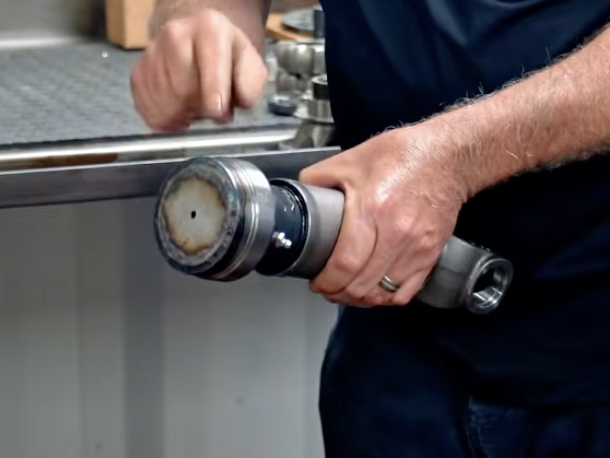
“We have a patent-pending accumulator inside of this, like a shock,” Jayson Miles of Tubeworks explained. “As this thing plunges in and out, rather than the grease centrifugally spinning and filling this cavity, there’s an accumulator that pushes the grease back into the female barrel itself.”
The system is designed to continually return grease to the splines, helping protect the glide coating and reduce the wear that can eventually lead to excessive movement, galling or binding.
Tested in Real-World Off-Road Racing
The upgraded double slip joint isn’t simply a concept. JE Reel and Tubeworks have been testing the design with race teams for approximately a year. According to Miles, the results have shown a significant improvement in durability.
“We’ve tested this for the last year with a couple other race teams, and we’re seeing at least 100% improvement on the lifespan and reliability of just the glide coat surviving and not losing grease on the slip,” Miles said.
That reliability becomes particularly important on trucks requiring two to three inches or more of driveshaft slip. According to the companies, some race teams have reached the point of replacing the slip joint after every event because of wear to the glide coating.
Binding within the slip joint can also transfer loads elsewhere in the drivetrain, potentially contributing to wear or damage within the differential and transmission. By maintaining lubrication throughout the joint’s movement, the new design is intended to extend component life while reducing stress on other parts of the driveline.
Race Development That Becomes a Product
Some of the most effective motorsports products don’t begin with an idea for something new. They begin with a broken part.
Competition exposes weaknesses that may never appear in normal driving conditions. Trophy Trucks accelerate that process by combining horsepower, weight, suspension movement and punishing terrain into one of the harshest environments a driveline can experience.
The new JE Reel double slip joint is the result of responding to those demands with a purpose-built solution.
“We’re here not just to sell you more parts,” Reel said. “We’re here to actually solve your problems.”
The new double slip joint assembly will be available exclusively through JE Reel Driveline, with new JE Reel double slip assemblies incorporating the updated design.
For Trophy Truck and 6100 teams fighting double slip joint wear and driveline reliability issues, the goal is straightforward: keep grease where it needs to be, improve serviceability, extend component life and eliminate another potential failure point.
In desert racing, that can be the difference between reaching the finish line and recording a DNF.
For more information on JE Reel’s new double slip joint and other driveline products, visit the JE Reel Driveline website.